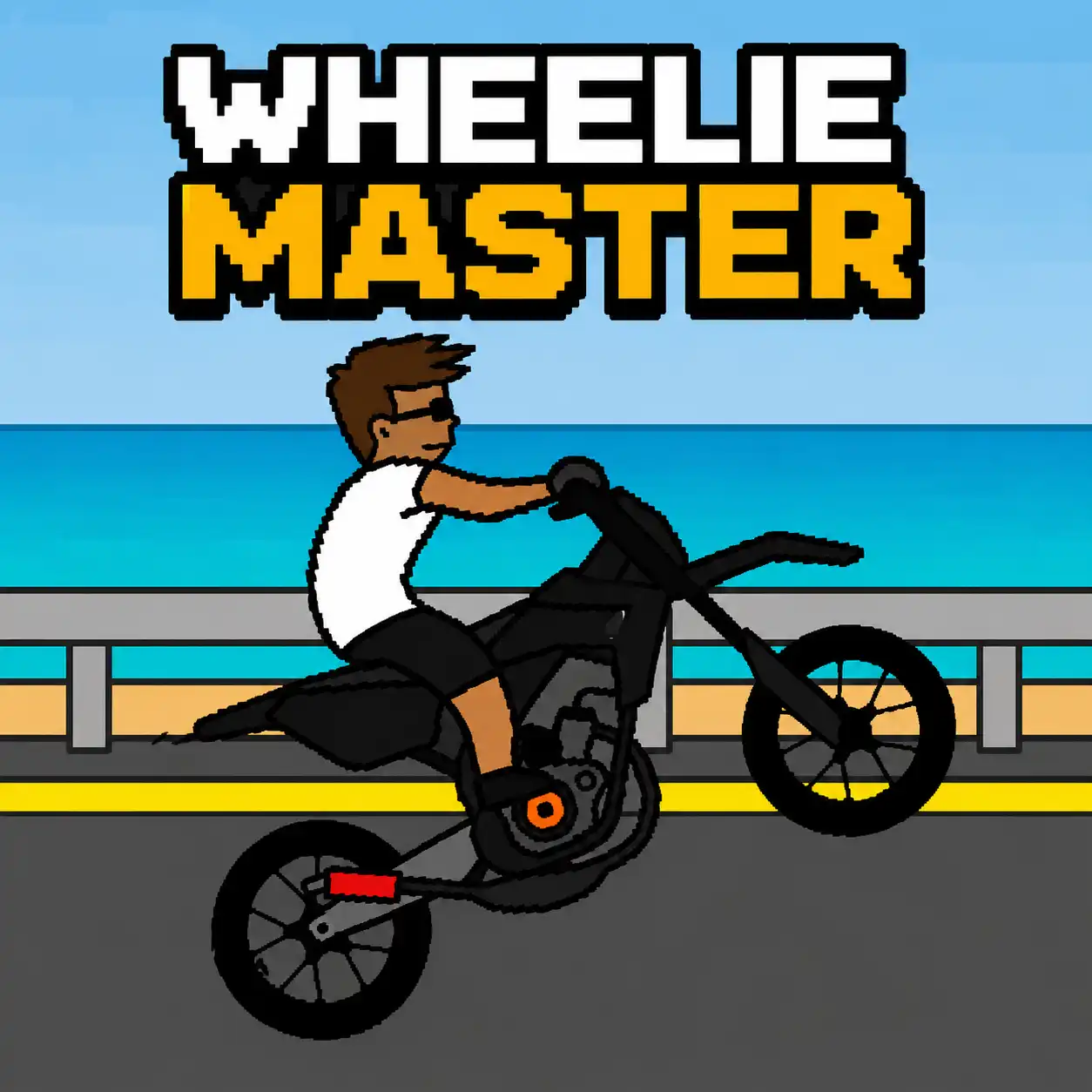











There is no throttle in Wheelie Master.
That's the thing that catches everyone out. You can't accelerate, you can't brake, and you can't slow down. Your bike rolls forward on its own and the only thing you control is lean.
Two keys tip you back and forward. That's the entire game — and it's far harder than it sounds.
Here's the full control set (including two keys most players never touch), the balance technique that actually works, and the one adjustment that stops you flipping on hills.
What Is Wheelie Master?
Wheelie Master is a free 2D side-scrolling bike balance game published by 1Games.IO. It first launched in December 2025 and received a controls, UI and sound update days later, so it's a genuinely new title.
It runs in your browser with no download, on desktop and mobile.
The premise is stripped right back: no races, no rivals, no timers, no finish line. Your bike moves forward automatically across endless terrain, and your only job is to keep the front wheel in the air for as long as you can.
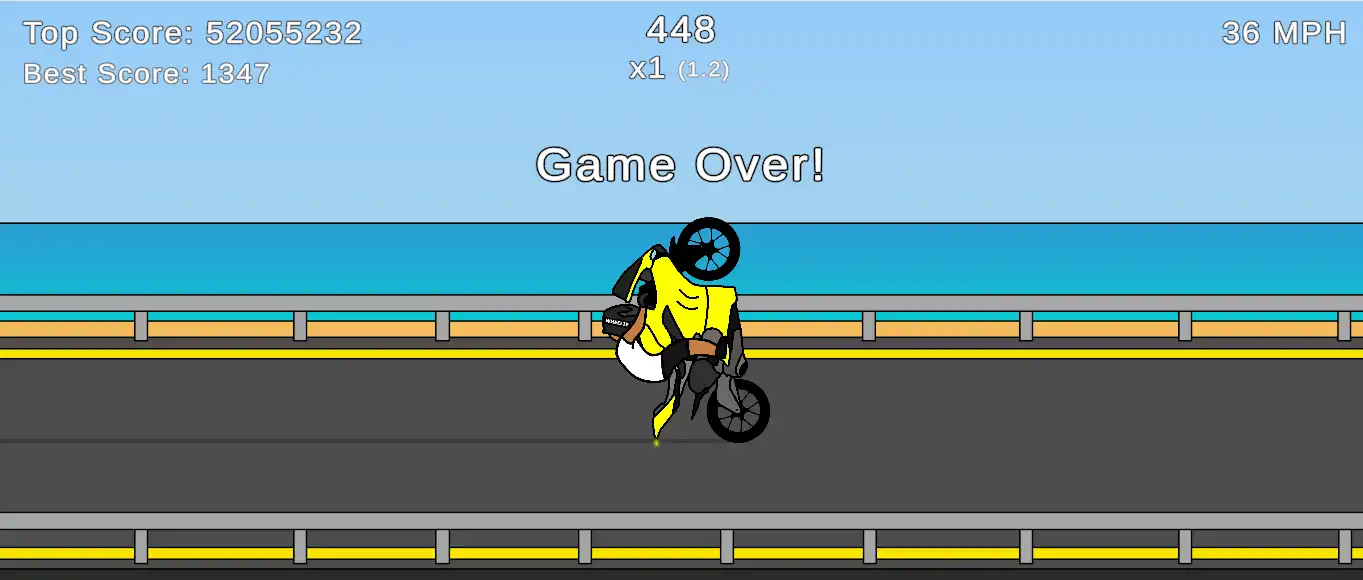
One mistake ends the run. There are no checkpoints, no lives and no recovery button. When you fall, that attempt is over — but restarts are instant, so you're straight into the next one.
Controls
Action | Key |
Lean back (lift the front wheel) | Left arrow or A |
Lean forward (lower the front wheel) | Right arrow or D |
Artistic poses | Up / Down arrows or W / S |
On mobile it's even simpler: press to lift, release to stabilise.
Left and Right are your whole game
Left arrow leans you back. This is what lifts the front wheel and starts the wheelie, and what keeps it up when the nose starts dropping.
Right arrow leans you forward. This is your save. When you're rotating too far back and about to loop out, this brings the nose down and rescues the run.
That's it. There is no speed control anywhere. Everything you do is a weight shift.
The pose keys nobody uses
Up and Down (or W and S) perform artistic poses while you're on one wheel.
Most players never press them, which is a shame for two reasons. They add style to your riding — and in some situations they help with your balance, because shifting the rider's position changes how the bike sits.
Try them once your wheelie is stable. Don't reach for them while you're still fighting for the balance point.
The Balance Point
Every wheelie has a sweet spot — the exact angle where the front wheel stays up without you constantly correcting. Above it you loop out backwards; below it the nose drops.
Finding that angle is the game. Holding it is the skill.
Small inputs, always
This is the single most important technique, and it's where nearly every new player goes wrong.
Tap the keys. Never hold them.
The bike reacts instantly to input. A long press overshoots in whichever direction you pressed, which forces a bigger correction the other way, which overshoots again. That oscillation is what ends most runs — not the terrain.
Light, frequent taps keep you sitting on the balance point. Heavy-handed riders flip within seconds; calm riders ride for minutes.
The two ways you die
Flipping backwards. Too much lean back, you rotate past the balance point, and you go over. Fix: tap right early, before it feels urgent.
Slamming the front wheel down. Too much lean forward, or panicking and over-correcting, and the front crashes down. Fix: ease it back up with a light left tap rather than dropping it hard.
Watch the bike angle, not the road
Your instinct is to stare at the terrain ahead. Better riders watch their own bike's angle, because that's what you're actually controlling. The terrain matters, but your angle relative to the balance point is what decides whether you survive the next second.
Handling the Terrain
The track is endlessly generated and different every run, so there are no patterns to memorise. You have to react.
Lean forward slightly before an uphill slope. This is the most useful terrain tip in the game. A rising slope pushes your nose up for you — so if you're already leaning back when you hit it, the hill finishes the flip. Pre-empt it with a small right tap and let the slope do the lifting.
Expect the opposite on downhills. Descending drops your nose, so you'll need a touch more lean back than usual to hold the wheelie.
Bumps are jolts, not gradual. A bump can spike your angle instantly. Don't panic-correct with a big input — a bump usually settles itself if you hold steady.
The difficulty climbs with distance. Terrain gets rougher the further you ride, so your inputs need to get more precise, not more aggressive.
Score, Coins and Unlocks
Your score is based on distance and control quality, not just how far you got. Smooth, well-controlled riding scores better than a scrappy run of the same length.
The current global top score sits right above your own score during every run. That's a deliberate design choice and it works — you always have a target in view.
Coins come from distance. Longer wheelies earn more, and coins unlock new bikes, helmets and accessories.
Each bike changes the physics
This matters more than it looks. Different bikes have different weights and handling, which means a different balance point.
So a bike you're bad on isn't a worse bike — it's one whose sweet spot you haven't learned yet.
Practical advice: stick with one bike until you're consistent on it. Learning one balance point properly builds the muscle memory that transfers to the others. Swapping constantly means you never settle into any of them.
Helmets and accessories are cosmetic, so buy those once you've got the bike you want.
Tips That Actually Help
Go easy on the keys. If you take one thing from this guide, it's this. Lighter inputs, more often.
Restart immediately after a fall. Runs are short and restarts are instant. More attempts beats longer thinking.
Ride without chasing distance at first. Spend a few runs just holding a wheelie at a comfortable angle. Muscle memory comes before ambition.
Add poses only when stable. Style points aren't worth losing a good run for.
Compare against your own last run, not the global leaderboard. Improvement here is measured in seconds, and it's real.
Play on desktop if you can. Keyboard taps give you finer control than touch input.
Common Problems
I flip backwards constantly. Too much lean back, held too long. Tap the right arrow earlier than feels necessary.
My front wheel slams down. You over-corrected forward. Bring it back up with a light left tap rather than a big one.
I can't get the front wheel up at all. Hold the left arrow slightly longer to initiate, then switch to small taps once the nose is up.
I flip every time I hit a hill. Lean forward slightly before the uphill. The slope lifts your nose on its own.
There's no accelerator. Correct — the bike moves forward by itself. You only control lean.
This bike feels impossible. Every bike has its own balance point. Either commit to learning it or switch and stick with one that suits you.
Keyboard doesn't respond. Click once directly on the game window first. Browser games need focus before they register keystrokes.
Frequently asked questions
Is Wheelie Master free?
Yes — free in your browser, no download and no account needed.
Who published it, and when?
1Games.IO, first released in December 2025.
What are the controls?
Left arrow or A to lean back, right arrow or D to lean forward, and up/down (or W/S) for artistic poses.
How do I accelerate?
You don't. The bike moves forward automatically — lean is your only control.
What do the up and down keys do?
They perform artistic poses, which add style and can help your balance in some situations.
How is my score calculated?
Distance and control quality. Smooth riding scores better than a rough run of the same length.
What do coins unlock?
New bikes, helmets and accessories. Bikes change the physics; helmets and accessories are cosmetic.
Are there checkpoints?
No. One mistake ends the run, but restarts are instant.