







Everyone plays Street Wheelie the same way at first: yank the front wheel as high as it'll go, hold it, and flip over backwards within four seconds.
The trick is riding low.
A shallow, steady wheelie is far easier to hold than a dramatic one, and since your score comes from how long you stay up rather than how high you get, low wins every time. Once that clicks, your distances multiply.
Here's the full control set — including a key that saves your run — plus all four maps and the throttle technique that actually works.
What Is Street Wheelie?
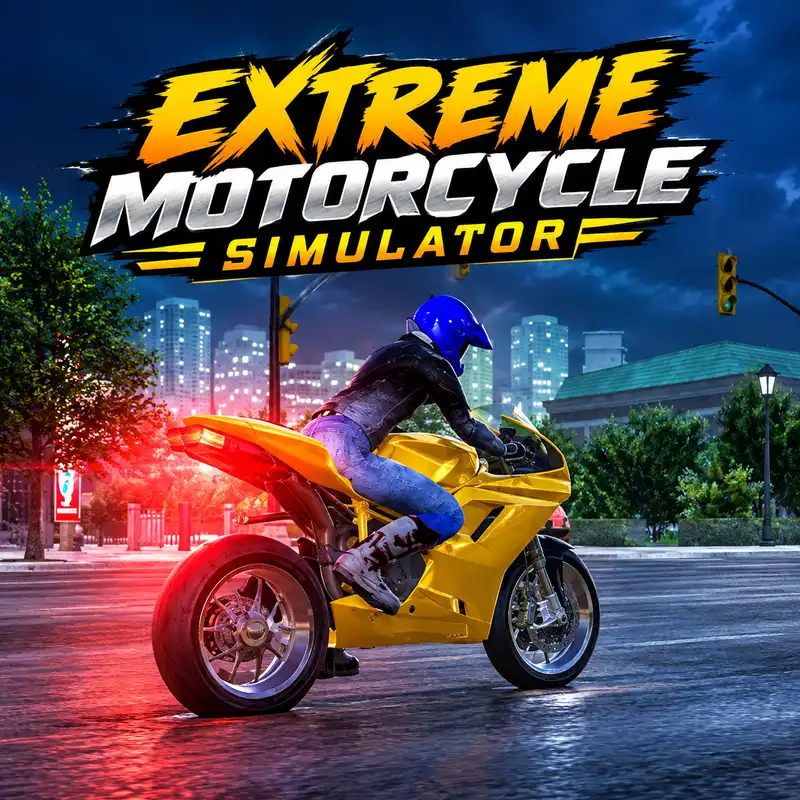
Street Wheelie is a free 3D stunt bike game that runs in your browser with no download, on desktop, tablet and mobile.
There's no racing here. No opponents, no lap times, no finish line. Your bike rolls forward automatically, and your only job is to keep the front wheel in the air for as long as you can while navigating real 3D streets.
Fall or flip and the run ends. Points come from long, smooth wheelies, and points unlock new bikes, helmets, gloves and goggles.
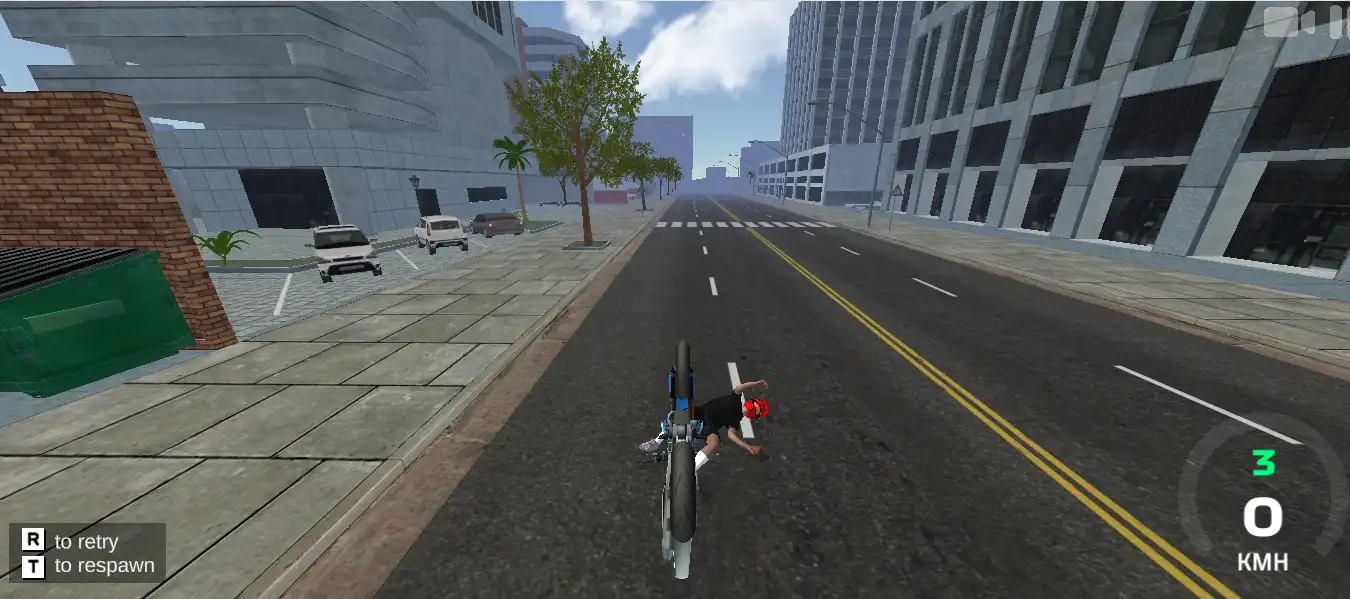
Being 3D rather than side-scrolling matters, because you're not just balancing — you're steering too. Junctions, corners and obstacles all have to be dealt with while you're up on one wheel.
Controls
Action | Key |
Tilt back (lift the front wheel) | Up arrow or W |
Tilt forward (lower the wheel) / brake | Down arrow or S |
Steer left / right | Left / Right arrows or A / D |
Restart | R |
Respawn at last checkpoint | T |
T is the key nobody tells you about
T puts you back at your last checkpoint.
This matters because Street Wheelie has checkpoints scattered through its maps. Crash halfway across the city and you don't have to ride all the way back — press T and you're returned to where you last passed one.
R restarts completely, which is what you want when a run is beyond saving from the start.
Knowing the difference saves a lot of wasted riding.
The Low-Angle Technique
This is the single most useful thing in this guide.
Keep your wheelie angle low and steady.
A high wheelie looks impressive and is enormously harder to hold. The higher you lift, the closer you sit to the tipping point, and the smaller your margin for error when the road changes underneath you.
A low wheelie — front wheel just clearly off the ground, bike only slightly reared — is stable, forgiving, and scores exactly the same per second.
Since your score is time-based, not height-based, a boring low wheelie you can hold for a minute beats a spectacular one that ends in five seconds.
Throttle Technique
The bike moves on its own, but your throttle input controls the angle. Here's how to use it properly.
Build speed gradually. Sudden acceleration snaps the front wheel up faster than you can react. Ease into it and the lift is controllable.
Keep your speed moderate. Going flat out makes the bike unstable and leaves you no time to react to what's ahead. A moderate pace gives you room to correct.
Use short taps, not long holds. This is the core skill. Each tap nudges the front up slightly; holding the key pulls you straight past the balance point. Frequent light taps keep you sitting exactly where you want to be.
Release slightly to lower the angle. If you've come up too high, easing off drops the nose gently — far better than a hard correction.
Brake precisely, not hard. When you're leaning too far back and about to loop out, a gentle brake tap pulls the front down just enough to recover. Grabbing a fistful of brake slams the wheel down and ends your wheelie anyway.
The Four Maps
Street Wheelie gives you four open environments to ride freely in:
Practice (Training Area) — A safe space with no pressure. This is where you should start, and where you should go whenever you unlock a new bike.
City — Detailed urban streets. The most technically demanding, with traffic-style obstacles, junctions and tighter lines.
Country — Open, scenic roads. Long straight stretches make this the best map for chasing distance records, since there's less to steer around.
Town — Compact street blocks. A middle ground between City and Country.
Which to use when: learn on Practice, build your record on Country, and use City when you want a real technical challenge.
Bikes and Gear
Every bike feels different. Some pull the front wheel up almost too easily; others need patience before the wheel lifts at all. That means each bike has its own balance point and its own throttle rhythm.
Stick with one bike until you're consistent on it. Learning one bike's behaviour properly builds instincts that transfer. Swapping constantly means you never settle into any of them.
When you do unlock a new one, take it to the Practice map first rather than discovering its quirks mid-run on City streets.
Gear — helmets, gloves and goggles — is unlocked with points as you improve. Bikes are what change how you ride; gear is mostly about how you look.
Upgrade handling and stability before speed. An easier-to-read bike extends your runs, and longer runs are what earn the points for everything else. Speed is worth buying once you're consistently holding long wheelies and want bigger distances.
Riding in 3D: Watch the Road
Because this is a 3D open map rather than a flat side-scroller, you've got a second job: not hitting anything.
Look well ahead, not at your front wheel. Obstacles, corners and junctions need to be spotted early. If you're staring at your bike, you'll see a hazard at the exact moment it's too late to steer around it while balancing.
Steer gently. Sharp turns unsettle a wheelie badly. Wide, gradual lines keep you up; sudden inputs put you down.
Plan your route on straights. If there's a junction coming, decide which way you're going before you arrive rather than during.
Tips That Actually Help
Ride low, not high. Worth repeating — it's the difference between five seconds and five minutes.
Short taps beat long holds. Every time.
Start every session on Practice. A minute of warm-up beats three failed runs on City.
Press T instead of R when you've got checkpoint progress. Don't throw away half a map.
Chase your own record, not perfection. Improvement here is measured in steady seconds, and it comes fast once the technique clicks.
Play on desktop if you can. Keyboard taps give finer throttle control than touch.
Common Problems
I flip backwards immediately. You're lifting too high and holding the key too long. Aim for a low angle and use short taps.
My front wheel keeps slamming down. You've over-corrected or grabbed too much brake. Ease off gently instead of braking hard.
I can't get the wheel up at all. Build speed gradually first, then apply throttle — don't try to lift from a standstill.
I keep hitting things in the city. Look further ahead, and use the Country map while you're still learning balance.
I lose all my progress when I crash. Press T to return to your last checkpoint rather than restarting.
This new bike feels awful. Every bike has a different balance point. Take it to the Practice map and learn it there.
Keyboard doesn't respond. Click once directly on the game window first. Browser games need focus before they register keystrokes.
Frequently asked questions
Is Street Wheelie free?
Yes — free in your browser, no download, no registration.
What are the controls?
Up or W to tilt back and lift the front wheel, Down or S to tilt forward or brake, left and right to steer, R to restart, and T to respawn at your last checkpoint.
How do I accelerate?
The bike moves forward automatically. Your inputs control the angle and speed, not the starting throttle.
How many maps are there?
Four: Practice, City, Country and Town.
What can I unlock?
Bikes plus rider gear including helmets, gloves and goggles.
Should I do high or low wheelies?
Low. Score is based on how long you hold the wheelie, not how high you lift, and low angles are far more stable.